
Community identification
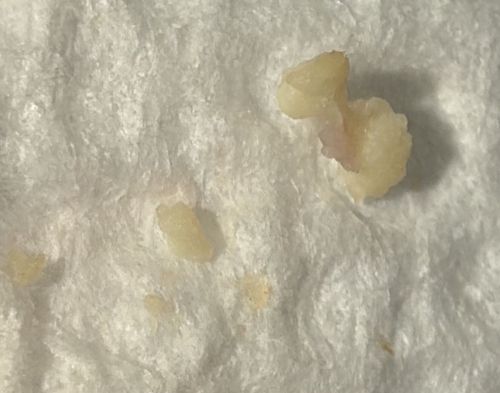
Tonsil Stone (Not an insect)
Tonsillolith
- Order & Family
- Not applicable (Mineralized debris)
- Size
- Varies from microscopic to over 1 cm in diameter, though typical 'stones' are 2-5 mm.
Natural Habitat
Found inside the crypts (crevices) of human palatine tonsils.
Diet & Feeding
Formed from an accumulation of food debris, dead cells, mucus, and oral bacteria that calcifies over time.
Behavior Patterns
These are inanimate objects that form gradually in tonsil crevices. They are often dislodged by coughing, sneezing, or manual removal.
Risks & Benefits
Risks: Can cause chronic bad breath (halitosis), sore throat, difficulty swallowing, or ear pain. Benefits: None.