
Community identification
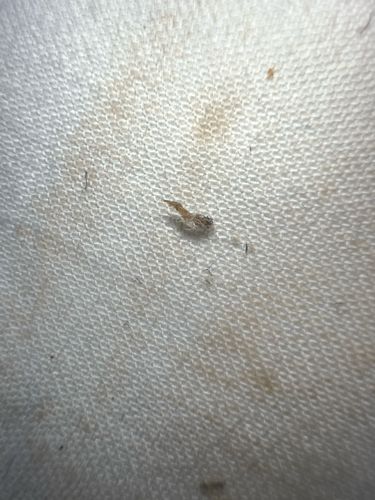
Case-bearing clothes moth (larva)
Tinea pellionella
- Order & Family
- Order: Lepidoptera; Family: Tineidae
- Size
- Case length: 8-10 mm; Larva: up to 10 mm
Natural Habitat
Indoors in homes, museums, and warehouses; specifically near natural fibers and textiles.
Diet & Feeding
Keratin-rich organic materials including wool, silk, fur, feathers, hair, and sometimes carpets or upholstery.
Behavior Patterns
Larvae construct a portable silken case incorporating fibers from their food source. They carry this 'sleeping bag' as they feed. They avoid light and prefer dark, undisturbed areas for development.
Risks & Benefits
Risk: Destruction of household textiles, expensive clothing, and heirlooms. Benefits: In the wild, they help decompose animal debris like fur or feathers, recycling nutrients back into the ecosystem.