
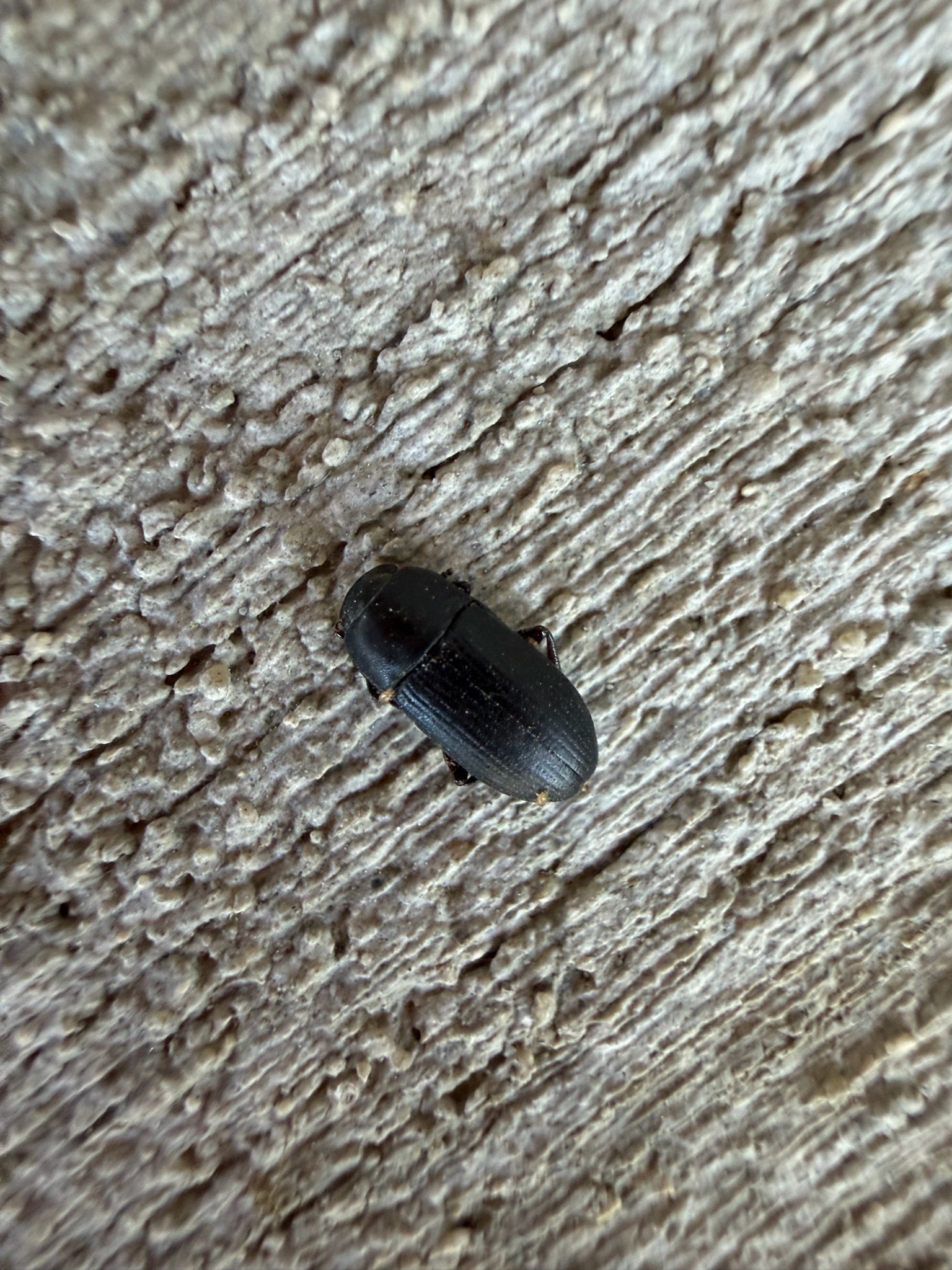
Community identification
Black Turpentine Beetle
Dendroctonus terebrans
- Order & Family
- Coleoptera: Curculionidae (Subfamily: Scolytinae)
- Size
- 5 to 10 mm in length
Natural Habitat
Coniferous forests, primarily found in the lower trunk and stump area of stressed or injured pine and spruce trees.
Diet & Feeding
The larvae feed on the inner bark (phloem) of host trees, primarily pines, while adults feed on wood and fungi introduced to the tree.
Behavior Patterns
They are known for boring into the base of trees, creating characteristic 'pitch tubes' made of resin and boring dust. They often attack trees that are already weakened by drought, fire, or other mechanical damage.
Risks & Benefits
They are considered a significant forestry pest as they can kill healthy trees if infestations are heavy enough. Ecologically, they help break down dying trees, contributing to nutrient cycling in the forest.