
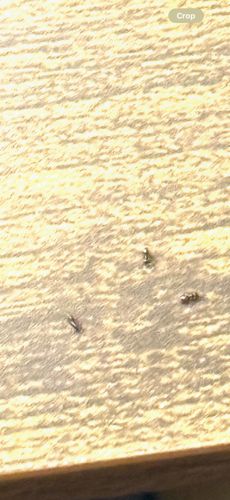
Ant
Formicidae
- Order & Family
- Hymenoptera, Formicidae
- Size
- Typically 2 to 25 mm (0.08 to 1 inch), depending on the species.
Natural Habitat
Ants are highly adaptable and can be found in nearly all terrestrial habitats, from forests and deserts to urban environments. They often build nests in soil, under rocks, in decaying wood, or within structures of buildings.
Diet & Feeding
Ants have a diverse diet, ranging from plant nectar and seeds to fungi, other insects (living or dead), and household scraps. Their diet largely depends on the species and available resources.
Behavior Patterns
Ants are social insects living in colonies that can range from a few dozen workers to millions. They exhibit complex social structures with distinct roles (queen, workers, soldiers) and communicate through pheromones, touch, and chemical signals. They are known for foraging in trails and building intricate nests.
Risks & Benefits
Risks include potential house infestations, damage to food supplies, and some species can inflict painful bites or stings. Benefits include acting as natural pest control by preying on other insects, aerating soil, and aiding in seed dispersal and decomposition, contributing to ecosystem health.