
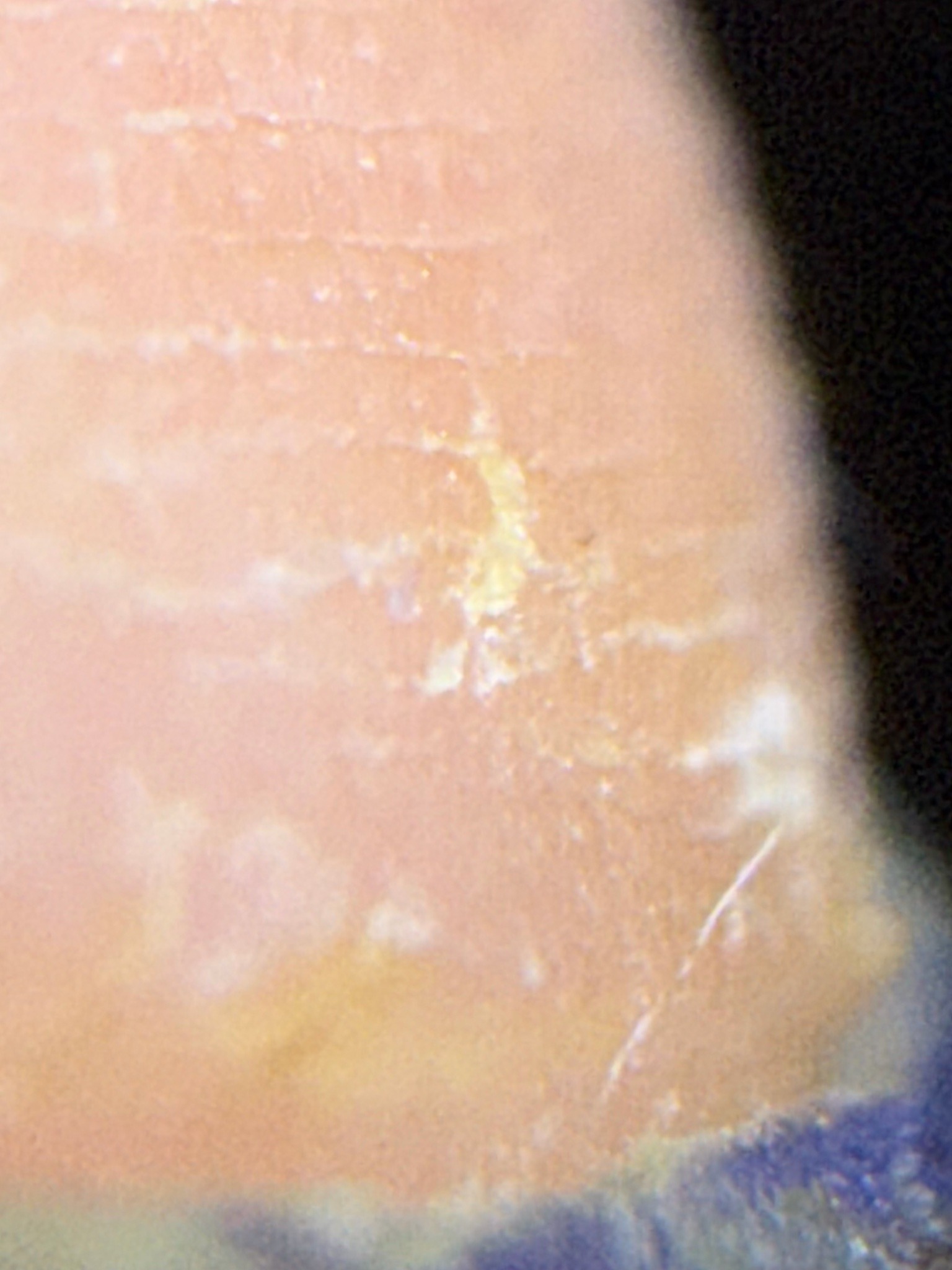
Community identification
Human itch mite (Scabies mite)
Sarcoptes scabiei var. hominis
- Order & Family
- Order Sarcoptiformes, Family Sarcoptidae
- Size
- 0.3 mm to 0.45 mm (microscopic, barely visible to the naked eye)
Natural Habitat
Burrows exclusively within the epidermal layer of human skin, particularly in skin folds, between fingers, wrists, and feet.
Diet & Feeding
Feeds on skin cells, extracellular fluid, and tissue secretions of the human host.
Behavior Patterns
Fertilized female mites burrow into the stratum corneum of the skin, creating serpentine tracks where they lay eggs over several weeks. Mites move faster in warm conditions and spread primarily through direct, prolonged skin-to-skin contact.
Risks & Benefits
Causes scabies, a highly contagious skin condition characterized by severe itching (especially at night) and pimple-like rash. Secondary bacterial infections like impetigo can occur from scratching. Has no ecological benefits as an obligate human parasite.