
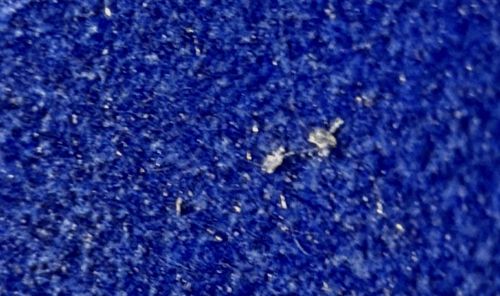
Mold Mite (also known as Grain Mite or Storage Mite)
Tyrophagus putrescentiae (or similar species in family Acaridae)
- Order & Family
- Order: Sarcoptiformes (Astigmata) / Family: Acaridae
- Size
- Minute; typically 0.3 mm to 0.5 mm in length (often visible to the naked eye only as moving specks or dust).
Natural Habitat
High-humidity environments indoors, such as pantries with stored grains, flour, or pet food; also found on damp furniture, upholstery, or bedding where microscopic mold grows.
Diet & Feeding
Primarily feeds on fungi (mold spores), yeast, stored food products (cheese, grain, flour), and organic debris.
Behavior Patterns
They reproduce rapidly in warm, humid conditions. Large populations can appear as a layer of 'living dust' moving across surfaces. They do not fly or jump but crawl slowly.
Risks & Benefits
Risks: They do not bite or burrow into humans, but exposure can cause allergic reactions known as 'Grocer’s itch' (dermatitis) or respiratory issues. They contaminate and spoil stored food products. Benefits: Generally none in a domestic setting; decomposers in nature.