
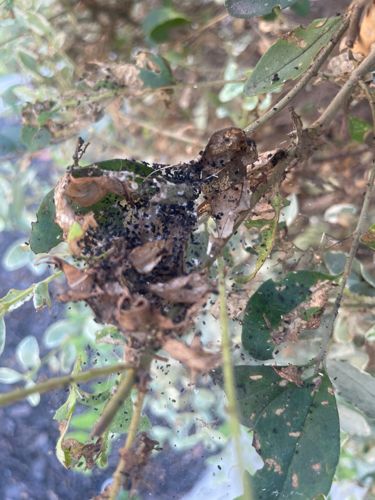
Boxwood Leafminer
Monarthropalpus buxi
- Order & Family
- Order: Diptera, Family: Cecidomyiidae (Gall Midges)
- Size
- Adults: Approximately 2-3 mm in length. Larvae: Up to 3 mm in length.
Natural Habitat
Primarily found in landscapes, nurseries, and gardens where boxwood plants are grown.
Diet & Feeding
The larvae feed internally on the leaf tissue of boxwood plants (Buxus spp.), creating characteristic blisters or tunnels. Adults do not feed on the plant.
Behavior Patterns
Boxwood leafminer larvae overwinter inside the leaves and pupate in early spring. Adults emerge from the leaves (often leaving a small 'window' in the leaf surface) and are short-lived. They lay eggs in new boxwood leaves, typically on the underside. Multiple generations can occur in warmer climates.
Risks & Benefits
Risks: Boxwood leafminers are significant pests of boxwood, causing aesthetic damage (yellowing, browning, distorted leaves) and, in severe infestations, can lead to defoliation and overall decline of the plant, making it more susceptible to other stresses or diseases. They do not pose risks to humans or animals. Benefits: There are no direct benefits to humans or the ecosystem from boxwood leafminers. They can be a food source for generalist predators, but their pest status outweighs any minor ecological role.