
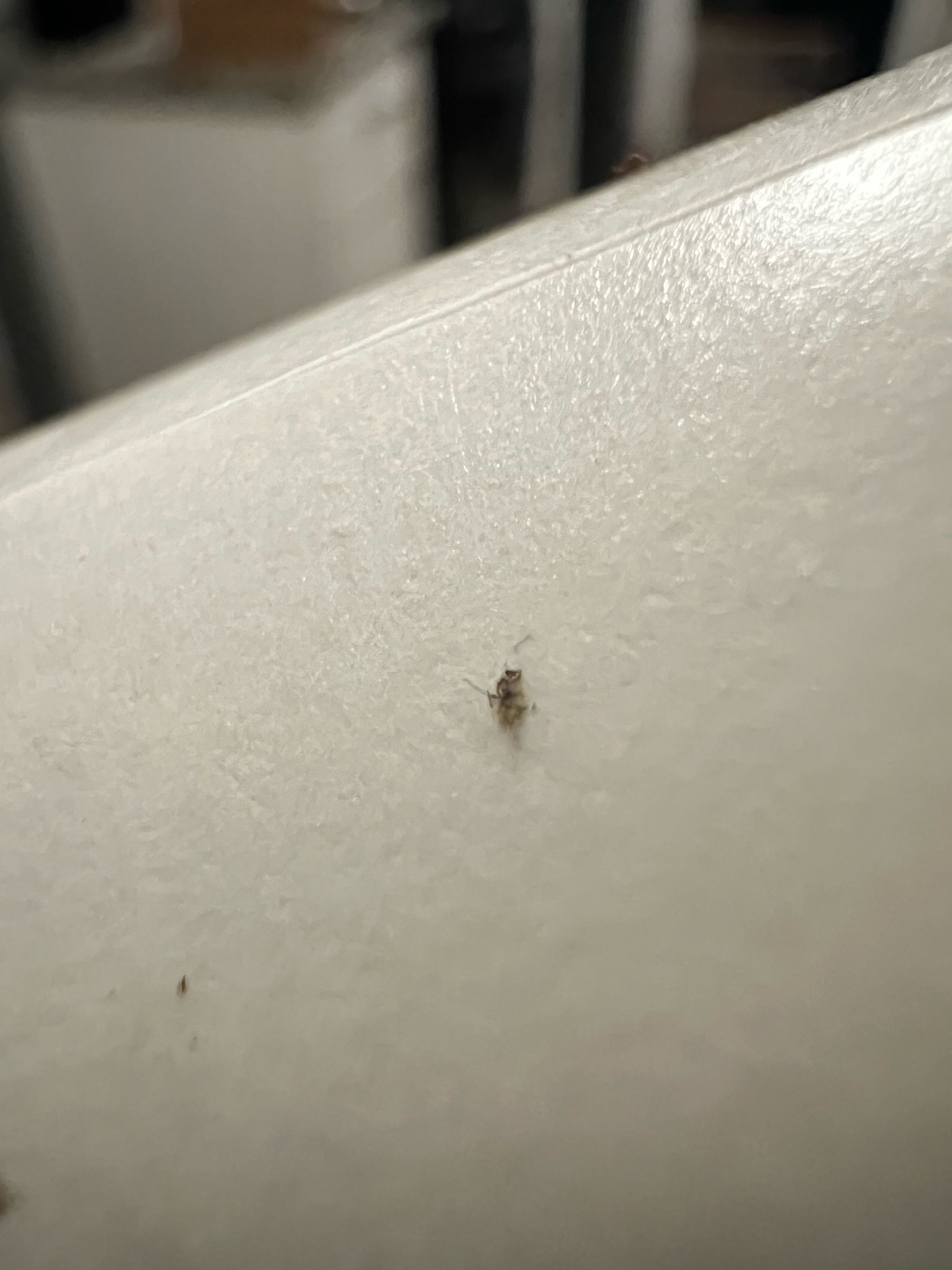
Community identification
Ghost ant
Tapinoma melanocephalum
- Order & Family
- Hymenoptera: Formicidae
- Size
- 1.3 to 1.5 mm (very small)
Natural Habitat
Tropical and subtropical regions worldwide; commonly found indoors in kitchens, bathrooms, and near moisture sources like potted plants.
Diet & Feeding
Broadly omnivorous, but they prefer sugary substances (honeydew from aphids) and greasy foods or proteins found in household crumbs.
Behavior Patterns
They are highly mobile and form multiple interconnected colonies (polygynous). They are known for their erratic, fast movements when disturbed and their ability to establish nests in tiny crevices inside buildings.
Risks & Benefits
They do not sting or cause structural damage, but they are significant nuisance pests in homes and hospitals. They can contaminate food and have the potential to mechanically transport disease-causing organisms.