
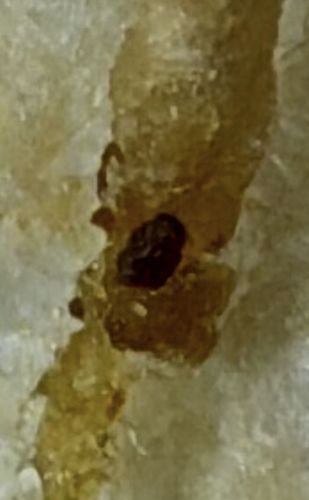
Case-bearing Clothes Moth (Larva)
Tinea pellionella
- Order & Family
- Order: Lepidoptera, Family: Tineidae
- Size
- Larvae are roughly 6-10 mm long; the protective case is usually about the same length as the larva.
Natural Habitat
Found indoors, typically in dark, undisturbed areas like closets, underneath carpets, inside woolen drawers, or on upholstered furniture.
Diet & Feeding
Larvae feed on keratin-rich animal fibers such as wool, fur, feathers, silk, felt, and sometimes hair or pet dander found in dust.
Behavior Patterns
The larva constructs and carries a portable, flattened, tubular case made of silk and mixed with fibers from its food source. It extends its head and legs from the front of the case to crawl and feed. When threatened, it retreats completely inside the case.
Risks & Benefits
Risk: They are a significant household pest causing destructive holes in clothing, carpets, tapestries, and taxidermy mounts. Benefit: In nature, they help break down animal remains (like feathers and carcasses), playing a minor role as decomposers, though this benefit is rarely appreciated in domestic settings.