
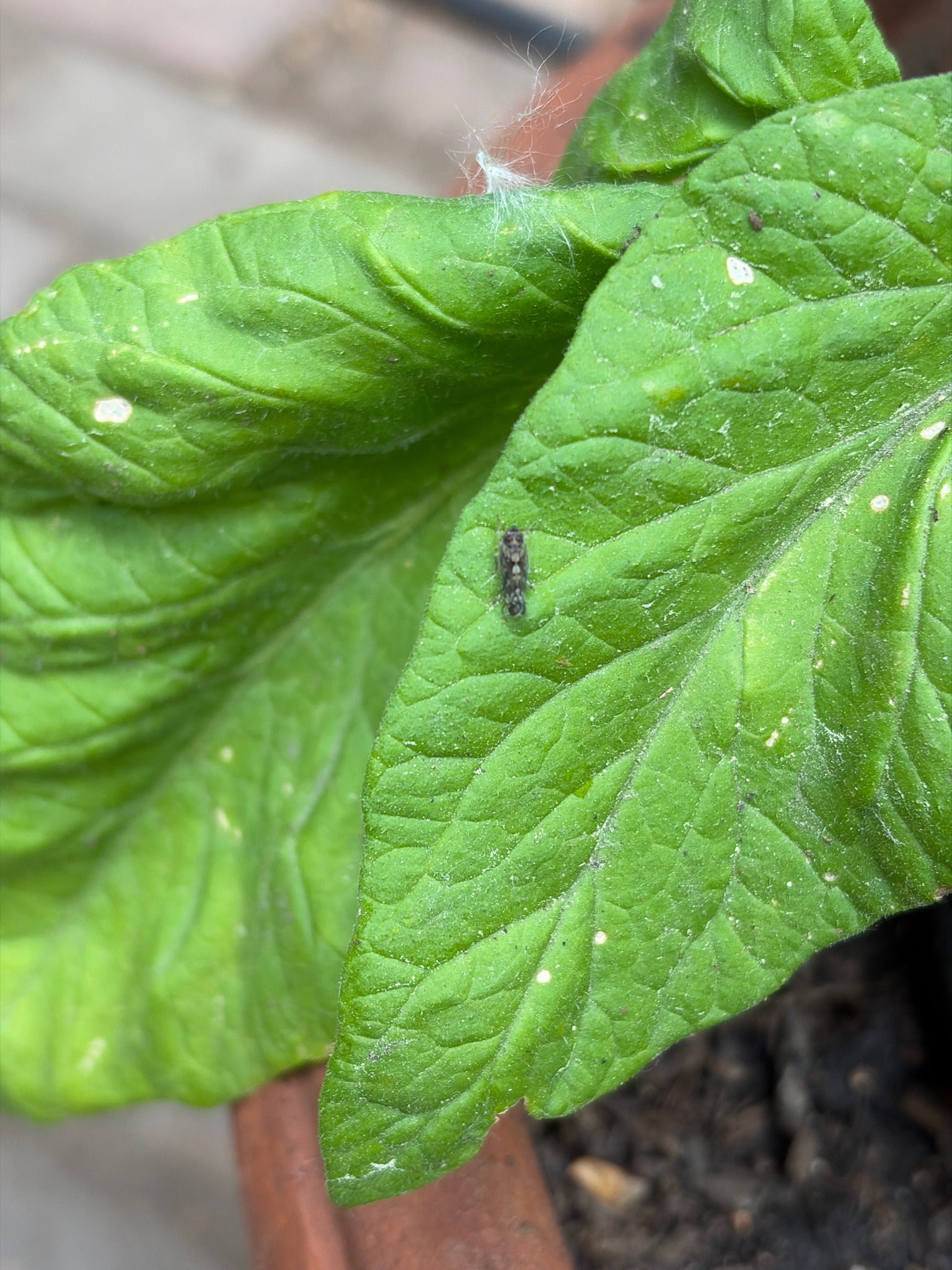
Community identification
Tomato Psyllid / Potato Psyllid
Bactericera cockerelli
- Order & Family
- Order: Hemiptera, Family: Triozidae
- Size
- 2 to 3 mm in length
Natural Habitat
Agricultural fields, gardens, and greenhouses, primarily on plants of the Solanaceae family like tomatoes, potatoes, and peppers.
Diet & Feeding
Plant sap from the phloem; they use piercing-sucking mouthparts to feed on the underside of leaves.
Behavior Patterns
They exhibit a 'jumping' behavior when disturbed, earning them the name jumping plant lice. They go through five nymphal stages and produce white, granulated excrement known as 'psyllid sugar.'
Risks & Benefits
Significant agricultural pest; they cause 'psyllid yellows' and are primary vectors for the bacterium Candidatus Liberibacter solanacearum, which causes Zebra Chip disease in potatoes, leading to massive crop losses.