
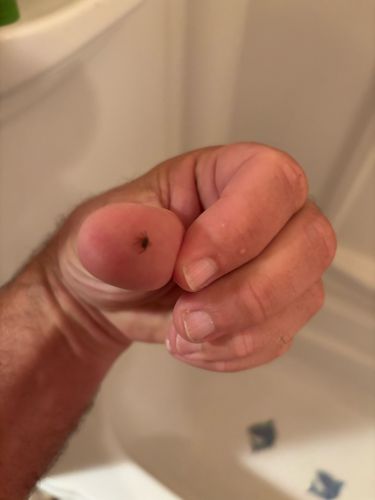
Tick (likely a deer tick or black-legged tick)
Ixodes scapularis (Black-legged tick/Deer tick) or similar Ixodes species based on appearance and common occurrence.
- Order & Family
- Order: Ixodida (or Parasitiformes, depending on classification system); Family: Ixodidae (hard ticks)
- Size
- Unfed larvae are less than 1 mm; unfed nymphs are about 1-2 mm; unfed adults are about 2-4 mm. Engorged ticks can swell to several times their unfed size.
Natural Habitat
Wooded areas, tall grasses, brush, leaf litter, and urban/suburban gardens, especially where deer and other wildlife are present.
Diet & Feeding
Blood of mammals, birds, and sometimes reptiles and amphibians. Different species have preferences for different hosts, and some change hosts at different life stages.
Behavior Patterns
Ticks are obligate parasites and spend most of their lives off-host, waiting for a suitable host to pass by. They cannot fly or jump, instead, they use a behavior called 'questing' where they climb onto vegetation and wait with their front legs extended to grab onto a host. Once on a host, they typically crawl to a protected area to attach and feed. They can remain attached for several days, feeding slowly.
Risks & Benefits
Risks: Ticks are vectors for numerous diseases, including Lyme disease (caused by Borrelia burgdorferi, primarily transmitted by Ixodes scapularis and Ixodes pacificus), Anaplasmosis, Babesiosis, Powassan virus, Rocky Mountain Spotted Fever, and many others. Their bite itself can cause local irritation or allergic reactions. Benefits: In natural ecosystems, ticks serve as a food source for some birds and other predators, but their role is generally minor compared to the health risks they pose to humans and animals.