
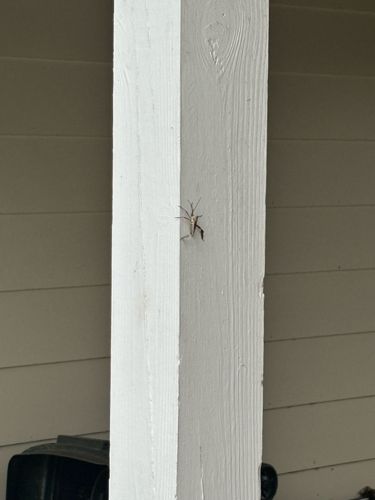
Wheel Bug
Arilus cristatus
- Order & Family
- Hemiptera, Reduviidae
- Size
- 25-38 mm (1.0-1.5 inches)
Natural Habitat
Gardens, orchards, fields, and wooded areas, often found on trees and shrubs. They prefer environments with plenty of other insects to prey upon.
Diet & Feeding
Predatory, feeding on a wide variety of insects including caterpillars, stink bugs, Japanese beetles, assassin bugs, and even other wheel bugs. They use their strong proboscis to pierce prey and inject a saliva that liquefies the prey's internal tissues, which they then suck out.
Behavior Patterns
Nocturnal hunters, though sometimes seen during the day. They are generally solitary and move slowly. When threatened, they may attempt to fly away or emit a foul odor. They are known for their distinctive cogwheel-like crest on their thorax.
Risks & Benefits
Potential risks include a painful bite if handled, which can be compared to a bee sting and may take several days to heal. They are not aggressive towards humans unless provoked. The primary benefit is their role as a beneficial insect, preying on many common garden and agricultural pests.