
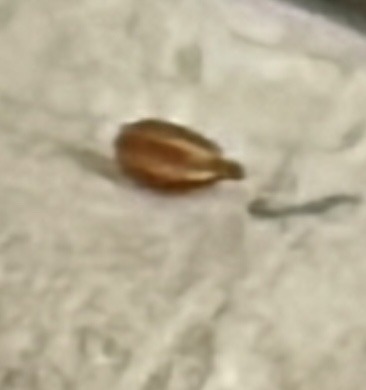
Cockroach Ootheca (Egg Case)
Blattodea (Family varies, likely Periplaneta americana or Blattella germanica)
- Order & Family
- Order: Blattodea; Family: Blattidae or Ectobiidae
- Size
- 5 to 10 mm in length
Natural Habitat
Dark, damp, or secluded areas such as behind appliances, in cupboards, or inside wall voids; often found in residential or commercial buildings.
Diet & Feeding
The ootheca itself does not eat; it is a protective casing containing embryonic cockroaches. Once hatched, nymphs eat organic matter, food scraps, and detritus.
Behavior Patterns
The female cockroach produces this hard, purse-like case to protect eggs from predators and insecticides. Depending on the species, she may carry it until just before hatching or deposit it in a safe location immediately.
Risks & Benefits
Risks: Indicates an active infestation. Cockroaches can spread pathogens, cause allergic reactions, and contaminate food sources. Benefits: None in a domestic setting; in the wild, cockroaches serve as decomposers.