
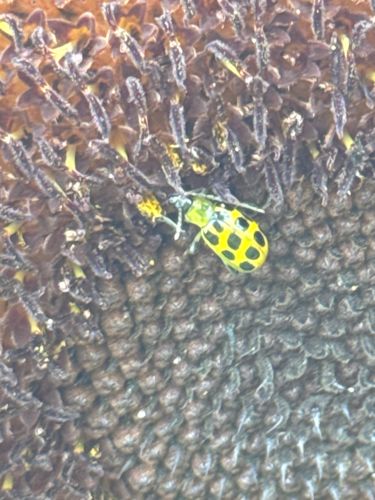
Spotted Cucumber Beetle
Diabrotica undecimpunctata howardi
- Order & Family
- Order: Coleoptera, Family: Chrysomelidae
- Size
- Adults are typically 5-7 mm (0.2-0.3 inches) in length.
Natural Habitat
Agricultural fields, gardens, and other areas where host plants are abundant. They are widespread in North and Central America.
Diet & Feeding
Adults feed on a wide range of host plants, including cucurbits (cucumber, squash, melons), corn, beans, and many other vegetables and ornamentals. They chew holes in leaves, stems, flowers, and fruits, and also feed on pollen. Larvae feed primarily on the roots of host plants, especially corn and cucurbits.
Behavior Patterns
Adults are active during the day, feeding on a variety of plants. Larvae are typically found in the soil, feeding on roots. They undergo complete metamorphosis with four life stages: egg, larva, pupa, and adult.
Risks & Benefits
Risks: Considered a significant agricultural pest. Adults can cause severe defoliation and damage to fruits, while larvae can stunt plant growth and cause lodging by damaging roots. They are also known vectors for certain plant diseases, such as bacterial wilt in cucurbits. Benefits: No significant benefits are associated with this insect; its role is primarily as a pest.