
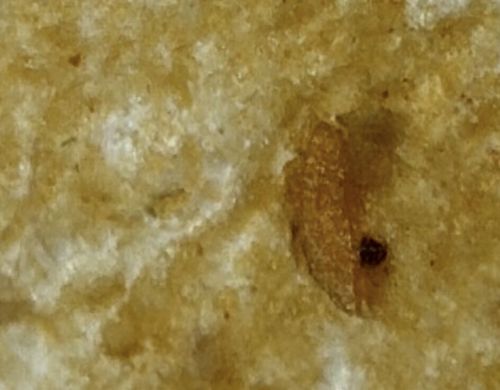
Booklouse (or Psocid)
Liposcelis spp. (Commonly Liposcelis bostrychophila)
- Order & Family
- Order: Psocodea (formerly Psocoptera), Family: Liposcelididae
- Size
- Very tiny, typically less than 1 mm to 2 mm in length.
Natural Habitat
Found indoors in high-humidity areas, damp basements, libraries, pantries, and stored food products like grains. They also live outdoors under bark and in bird nests.
Diet & Feeding
They feed on microscopic molds, fungi, starch, glue (like in book bindings), and stored food products including flour and grains.
Behavior Patterns
These wingless insects run somewhat erratically rather than flying. They thrive in humid environments which encourage mold growth. They reproduce parthenogenetically (without mating) in some species, leading to quick infestations.
Risks & Benefits
Risks: They are a nuisance pest that contaminates stored food and can trigger allergies or asthma in some people. They do not bite or spread disease. Benefits: In nature, they help break down organic detritus.