
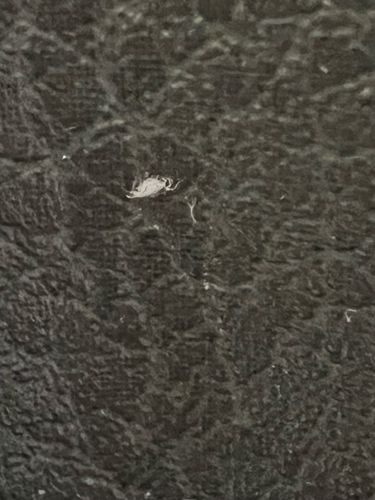
Community identification
Dust mite
Dermatophagoides farinae (American dust mite) or Dermatophagoides pteronyssinus (European dust mite)
- Order & Family
- Order: Sarcoptiformes; Family: Pyroglyphidae
- Size
- 0.2–0.3 mm (nearly microscopic to the naked eye)
Natural Habitat
Found indoors worldwide, primarily in mattresses, bedding, upholstered furniture, and carpets where human dander accumulates.
Diet & Feeding
Particles of organic detritus, primarily dead human and animal skin cells.
Behavior Patterns
They prefer warm, humid environments (70-80% humidity). They do not bite or live on humans; instead, they scavenge the environment for shed skin. They follow a life cycle of egg, larva, protonymph, tritonymph, and adult over about 3-5 weeks.
Risks & Benefits
Significant risk to humans as a major source of allergens. Their feces and body parts contain proteins that trigger asthma, eczema, and allergic rhinitis. There are no known ecological or human benefits.