
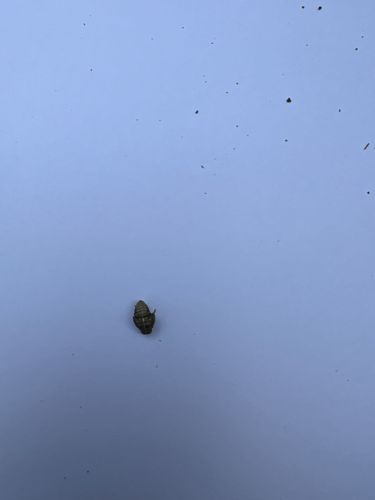
Carpet Beetle (likely Varied Carpet Beetle or Black Carpet Beetle larva)
Likely species include *Anthrenus verbasci* (Varied Carpet Beetle) or *Attagenus unicolor* (Black Carpet Beetle), among others in the Dermestidae family.
- Order & Family
- Order: Coleoptera, Family: Dermestidae
- Size
- Larvae typically range from 2 mm to 5 mm (0.08 to 0.2 inches) in length. Adults are small, usually 2 mm to 4 mm (0.08 to 0.16 inches) in length.
Natural Habitat
Indoors, carpet beetle larvae are found in dark, undisturbed areas such as under carpets, rugs, furniture, in closets, pantries, attics, and storage areas. They seek out natural fibers and food sources. Outdoors, adult carpet beetles are found on flowering plants, especially those with white or yellow flowers.
Diet & Feeding
In the larval stage, carpet beetles are scavengers that feed on a wide variety of animal-derived products, including wool, silk, feathers, leather, furs, pet hair, dead insects, dried animal carcasses, museum specimens, and even some pantry items like cereals and dried pasta. Adult carpet beetles primarily feed on pollen and nectar from flowers outdoors.
Behavior Patterns
Carpet beetle larvae are typically found in dark, undisturbed areas where their food sources are abundant. They are known for their slow movement and a tendency to roll up or play dead when disturbed. The adults are attracted to light and flowers, where they feed on pollen and nectar. The life cycle involves complete metamorphosis (egg, larva, pupa, adult), with the larval stage being the most damaging as it consumes fibrous materials.
Risks & Benefits
Risks: Carpet beetles are significant household pests, causing damage to natural fiber products such as wool carpets, clothing, upholstery, taxidermy, and museum collections. While they do not bite or sting, some individuals may develop skin irritations or allergic reactions to the larval hairs. Benefits: Outside of human dwellings, carpet beetles contribute to decomposition by feeding on organic matter, aiding in nutrient cycling. They can also be used in museum settings for cleaning bones of residual tissue.