
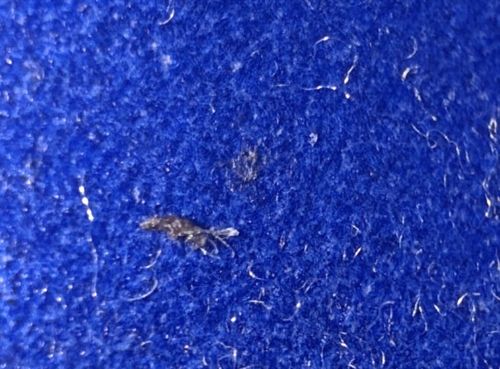
Community identification
Springtail
Collembola (subclass)
- Order & Family
- Entomobryomorpha (Order), often Entomobryidae (Family) for elongate forms
- Size
- Very small, typically 1 to 3 millimeters (some species may reach 6mm).
Natural Habitat
Found in damp, organic-rich environments such as leaf litter, soil, decaying wood, and sometimes indoors in bathrooms, basements, or potted plant soil where moisture is high.
Diet & Feeding
Detritivores that feed on decaying organic matter, bacteria, fungi, algae, and mold spores.
Behavior Patterns
They are famous for their 'jumping' ability provided by a tail-like appendage called a furcula, which snaps against the ground to catapult them away from danger. They do not fly or bite.
Risks & Benefits
Benefits: They are crucial decomposers that enrich soil health. Risks: Generally harmless to humans and pets; they do not bite or spread disease, though large populations indoors are a nuisance indicating excess moisture.