
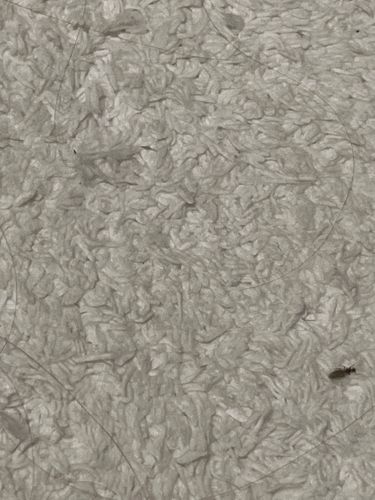
Booklouse / Psocid
Various species, e.g., Liposcelis corrodens, Trogium pulsatorium
- Order & Family
- Order: Psocoptera (or Psocodea), Family: Liposcelididae (or other families within Psocoptera)
- Size
- Typically 1-2 mm (0.04-0.08 inches) in length, sometimes smaller or slightly larger.
Natural Habitat
Booklice prefer warm, humid environments (above 50-60% relative humidity, 75-82°F or 24-28°C) and are commonly found indoors in homes, libraries, museums, and storage areas. They hide in books, papers, stored foods, plaster, carpets, and around windows where condensation may occur.
Diet & Feeding
Booklice feed on microscopic mold, fungi, yeasts, fragments of dead insects, cereals, paste from book bindings, and other organic detritus. They thrive on the starch and cellulose found in paper products.
Behavior Patterns
Booklice are often found in damp, dark, and undisturbed places. They are fast-moving when disturbed, but otherwise tend to remain still. They are attracted to mold and mildew, which thrive in humid conditions. They reproduce quickly, especially in favorable environments.
Risks & Benefits
Risks: Generally considered a nuisance pest, they do not bite humans or pets and are not known to transmit diseases. However, large infestations can damage books, papers, stored food products, and other starchy materials. In rare cases, their presence might trigger allergic reactions in sensitive individuals. Benefits: They play a role as decomposers in nature, breaking down organic materials, but this benefit is typically not applicable in indoor settings where they are considered pests.