
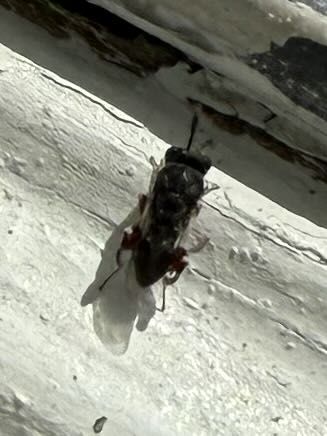
Sweat Bee (likely a species of Halictid bee)
Halictidae (family level, specific genus/species is difficult to determine from the image)
- Order & Family
- Order: Hymenoptera, Family: Halictidae
- Size
- Typically 4-10 mm (0.16-0.4 inches) in length, though some species can be smaller or larger.
Natural Habitat
Sweat bees are found in a wide range of habitats, including gardens, meadows, forests, urban areas, and agricultural fields. They prefer areas with exposed soil for nesting and abundant flowering plants for foraging.
Diet & Feeding
Adult sweat bees feed on nectar for energy. Larvae feed on a mixture of pollen and nectar collected by the female.
Behavior Patterns
Sweat bees are solitary or communal, with some species exhibiting primitive social behavior. Most species nest in the ground, digging burrows in exposed soil. Females provision their nests with pollen and nectar for their larvae. They are active during the day, foraging on a wide variety of flowers.
Risks & Benefits
Risks: Sweat bees can sting, but their sting is generally mild and causes only localized pain, similar to a pinprick. They are not aggressive and usually only sting if provoked or accidentally swatted. Benefits: Sweat bees are important pollinators for many crops and wild plants, contributing significantly to biodiversity and agricultural productivity.