
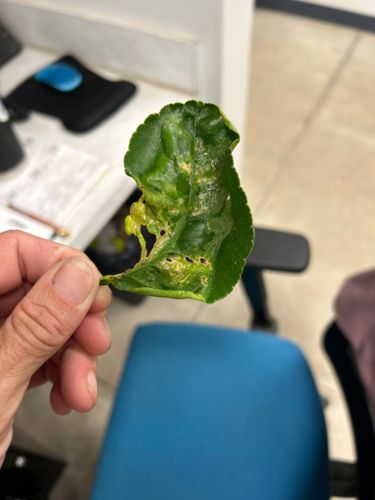
Citrus Leafminer
Phyllocnistis citrella
- Order & Family
- Order: Lepidoptera, Family: Gracillariidae
- Size
- Larvae: up to 3 mm long. Adults: small moths with a wingspan of approximately 4 mm.
Natural Habitat
Primarily found in citrus groves, nurseries, and home gardens where citrus trees (Citrus spp.) are grown. They prefer young, flushing leaves for oviposition and larval development.
Diet & Feeding
Larvae feed on the mesophyll cells of young, tender citrus leaves, creating characteristic serpentine mines. Adults are not known to feed significantly.
Behavior Patterns
The larva of the citrus leafminer creates winding tunnels, or 'mines,' within the leaf tissue, specifically between the upper and lower epidermis. This feeding causes the leaf to curl and distort. Adults are small, nocturnal moths that lay eggs on young, flush leaves. Multiple generations can occur within a year, especially in warm climates.
Risks & Benefits
Risks: Citrus leafminers are significant pests of citrus, especially young trees. Their feeding damage reduces the photosynthetic capacity of leaves, which can stunt tree growth and reduce fruit yield. While mature trees can tolerate some damage, heavy infestations weaken the trees and make them more susceptible to other stresses or diseases, such as citrus canker, which can enter through wounds created by the leafminer. Benefits: There are no known significant benefits associated with citrus leafminers; they are primarily considered agricultural pests.