
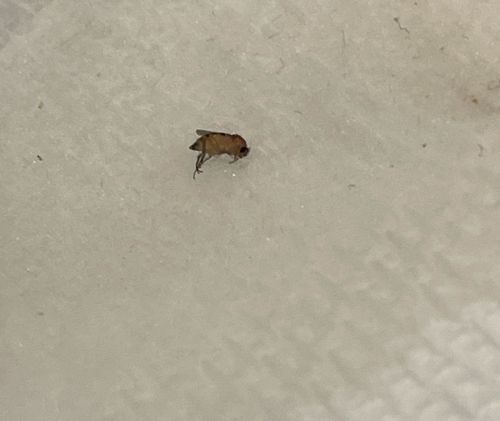
Community identification
Phorid Fly
Megaselia scalaris
- Order & Family
- Diptera: Phoridae
- Size
- 0.5 to 5.5 mm (1/64 to 1/4 inch)
Natural Habitat
Moist organic matter, drains, sewers, trash cans, and rotting vegetation
Diet & Feeding
Decaying organic material, fungi, and bacterial film in drains
Behavior Patterns
Characterized by a 'scuttling' or rapid running motion across surfaces instead of immediate flight when disturbed; they undergo complete metamorphosis from egg to adult in roughly 14-25 days.
Risks & Benefits
They are nuisance pests that can mechanically transport pathogens from unsanitary habitats to food surfaces; however, they serve as important decomposers in the environment.