
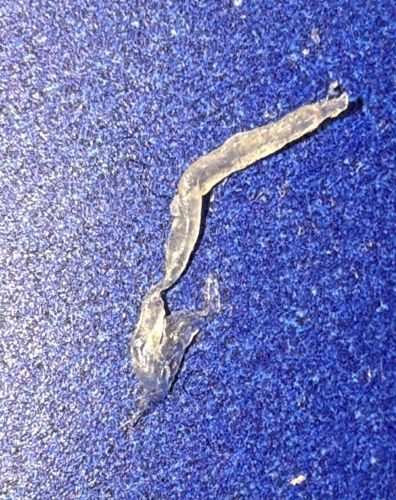
Flea Larva (Specimen likely a dried larva casing or exuviae)
Ctenocephalides felis (most likely) or Ctenocephalides canis
- Order & Family
- Order Siphonaptera, Family Pulicidae
- Size
- 2mm to 5mm in length (larval stage)
Natural Habitat
Found in dark, protected areas like carpets, pet bedding, gaps in flooring, and upholstery where organic debris accumulates.
Diet & Feeding
Scavengers that feed on organic debris, particularly 'flea dirt' (dried blood excreted by adult fleas), dead skin cells, and other insect remains.
Behavior Patterns
Flea larvae negatively phototactic (avoid light) and burrow deep into fibers. They spin a sticky, camouflaged cocoon before pupating. The image likely shows a desiccated larva or shed skin, as they dry out quickly outside of humid microclimates.
Risks & Benefits
Risks: Larvae indicate an active flea infestation. Adult fleas bite humans and pets, causing itching, dermatitis, and potential disease transmission (e.g., tapeworms, plague, typhus). No significant environmental benefits in domestic settings.