
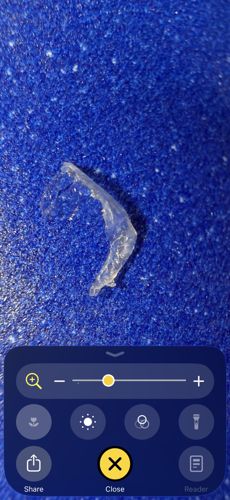
Community identification
Pinworm
Enterobius vermicularis
- Order & Family
- Order: Rhabditida, Family: Oxyuridae
- Size
- Females: 8-13 mm long; Males: 2-5 mm long. The object in the image appears to be a female specimen.
Natural Habitat
The human large intestine, specifically the cecum and appendix area; eggs may be found on clothing, bedding, or skin in the perianal area.
Diet & Feeding
They feed on intestinal contents, mucosal cells, and bacteria within the human gut.
Behavior Patterns
Nocturnal migration; gravid females travel to the perianal region at night to deposit thousands of eggs. This often causes intense itching (pruritus ani) which aids in the spread of eggs via the hands.
Risks & Benefits
Risk: Causes enterobiasis, leading to itching, irritability, and sleeplessness. Highly contagious, especially in households or childcare settings. Benefit: None to humans; purely parasitic.