
Community identification
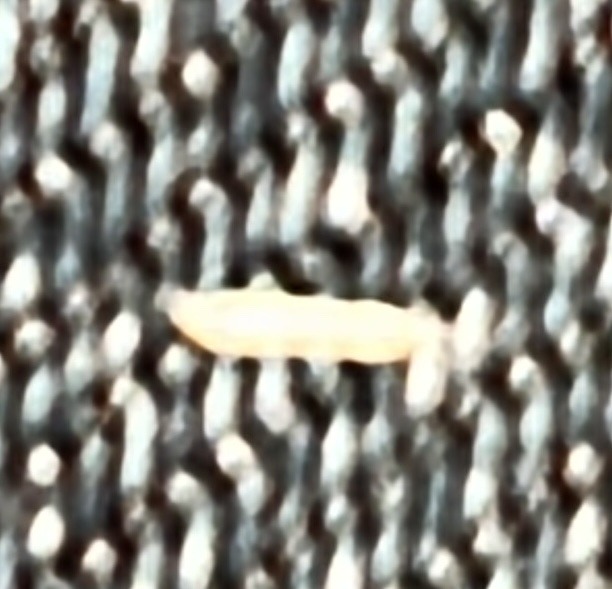
Clothing moth larva
Tineola bisselliella
- Order & Family
- Lepidoptera: Tineidae
- Size
- 1 mm to 12 mm depending on development stage
Natural Habitat
Dark, undisturbed indoor locations including closets, drawers, and attics where animal-based fibers are stored.
Diet & Feeding
Natural fibers containing keratin such as wool, silk, hair, fur, feathers, and lint.
Behavior Patterns
Larvae weave silken tubes or mats for protection while feeding and typically avoid light (photophobic).
Risks & Benefits
Risks include significant damage to clothing, carpets, and upholstery; they provide no significant benefits in a domestic ecosystem.