
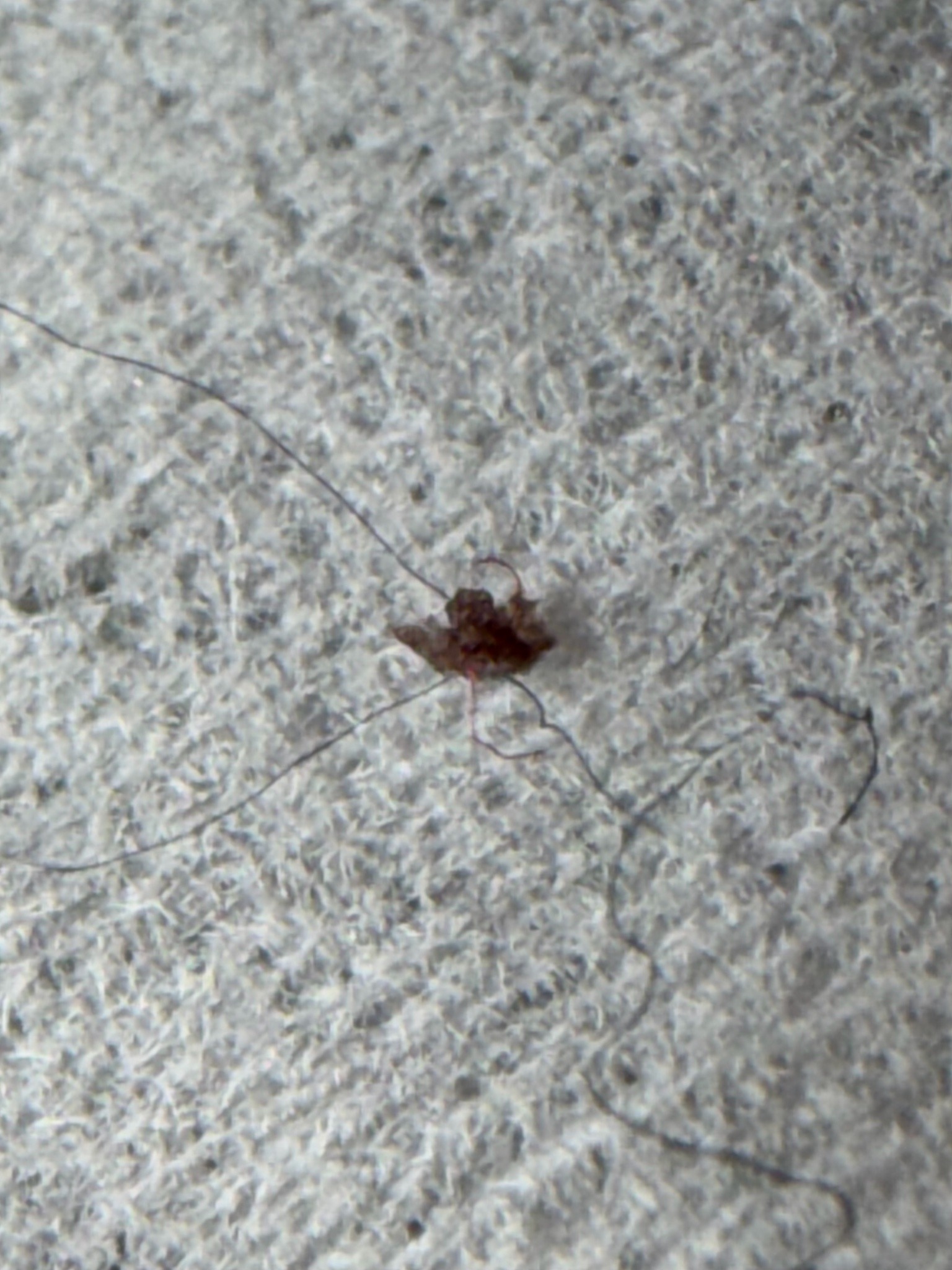
Likely cockroach nymph—possibly a German cockroach nymph
Blattella germanica (tentative identification)
- Order & Family
- Order Blattodea; family Ectobiidae
- Size
- Nymphs are approximately 2–10 mm long depending on age; adults are about 13–16 mm long.
Natural Habitat
Warm, humid indoor areas, especially kitchens, bathrooms, wall voids, under appliances, and near food or water sources. They may also occur in cracks and crevices beneath flooring or furniture.
Diet & Feeding
Omnivorous scavenger. It feeds on food crumbs, grease, starches, sugary materials, pet food, paper residues, and other organic debris.
Behavior Patterns
Usually nocturnal and highly secretive. Nymphs hide in cracks during the day and forage at night. They develop through several nymphal stages without a pupal stage. German cockroaches reproduce rapidly, and multiple individuals are often present when one is seen.
Risks & Benefits
Cockroaches can contaminate food and surfaces with bacteria, allergens, and fecal material; shed skins and droppings may aggravate asthma and allergies. They provide limited ecological benefits outdoors as decomposers and prey for other animals. The photograph is somewhat blurry, so a small beetle or another household insect cannot be ruled out; a sharper close-up showing the head, legs, and antennae would allow more certain identification.