
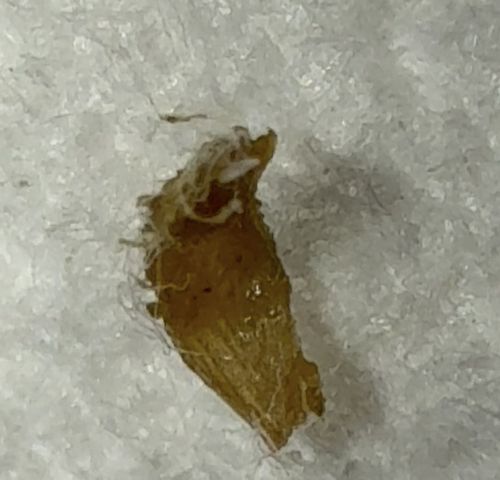
Case-bearing Clothes Moth (Larva)
Tinea pellionella
- Order & Family
- Lepidoptera: Tineidae
- Size
- Larval case is typically about 5 to 10 mm (0.2 to 0.4 inches) long.
Natural Habitat
Typically found indoors in dark, undisturbed areas like closets, underneath furniture, and in carpets. They thrive in environments containing animal fibers (wool, fur, feathers).
Diet & Feeding
The larvae feed on keratin-rich natural fibers, including wool clothing, carpets, tapestries, upholstery, furs, felt, and sometimes stored food products.
Behavior Patterns
The larva constructs a portable, flattened, pumpkin-seed-shaped case out of silk and fiber debris from which it never fully emerges. It carries this protective case around as it feeds, retreating inside when disturbed. It will eventually pupate inside this same case.
Risks & Benefits
Risks: They are considered a household pest because the larvae chew irregular holes in expensive textiles like wool suits, rugs, and sweaters, causing significant damage. Benefits: In nature, they act as decomposers of animal remains (keratin), but indoors they offer no benefits.