
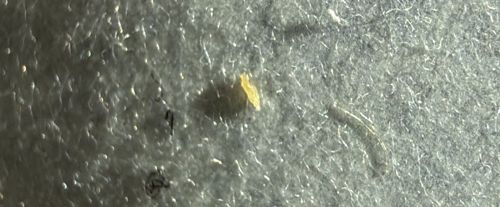
Community identification
Webbing clothes moth larva
Tineola bisselliella
- Order & Family
- Lepidoptera: Tineidae
- Size
- Larvae are roughly 1 mm to 12 mm long depending on maturity.
Natural Habitat
Indoor environments, specifically dark areas such as closets, chests, and behind furniture where natural fibers are stored.
Diet & Feeding
Larvae feed on animal fibers including wool, fur, silk, feathers, felt, and leather; they can digest keratin.
Behavior Patterns
Larvae spin silken tubes or mats as they feed. They are light-averse and tend to hide in crevices or within the folds of fabric. They undergo complete metamorphosis (egg, larva, pupa, adult).
Risks & Benefits
Risks: Major domestic pest that causes significant damage to clothing, upholstery, and carpets. Benefits: None in a human household context, though they act as scavengers of animal remains in nature.