
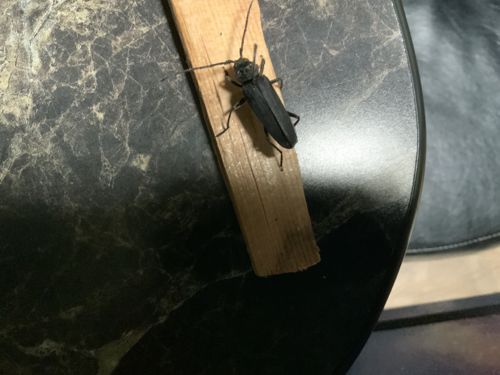
Pine Sawyer Beetle
Monochamus spp. (e.g., Monochamus carolinensis, Monochamus scutellatus)
- Order & Family
- Order: Coleoptera, Family: Cerambycidae (Longhorn Beetles)
- Size
- Typically 15 - 40 mm (0.6 - 1.6 inches) in length, excluding antennae. The antennae can be much longer than the body, especially in males.
Natural Habitat
Coniferous forests, pine plantations, logging sites, and areas with recently cut or dying conifer trees. They are often found on logs, stumps, and stressed or diseased trees.
Diet & Feeding
Larvae feed on the phloem and xylem of coniferous trees, especially pines, firs, and spruces. Adults may feed on conifer needles or bark, but their primary focus is reproduction. They are also known to feed on sap.
Behavior Patterns
Adult Pine Sawyers are typically nocturnal or crepuscular, attracted to lights. Females lay eggs in crevices of bark, especially on recently dead, dying, or freshly cut conifers. Larvae bore into the wood, creating extensive tunnels, which can be seen by the presence of sawdust-like frass expelled from boreholes. The larval stage can last several years. Adults emerge from the wood, leaving characteristic oval exit holes.
Risks & Benefits
Risks: Pine sawyer beetles are considered significant forest pests, especially in North America. Their larval boring can severely degrade the quality of lumber and pulpwood. They can weaken trees, making them susceptible to other pests and diseases, and can contribute to tree mortality in stressed stands. They are not harmful to humans. Benefits: As decomposers, they play a role in breaking down deadwood, contributing to nutrient cycling in forest ecosystems. They can also be a food source for birds and other forest animals.