
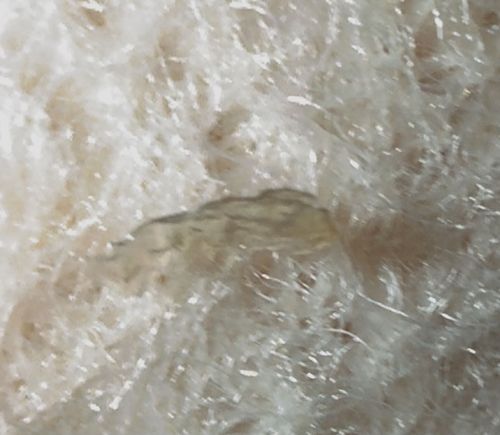
Mealybug (or potentially Woolly Aphid)
Family Pseudococcidae
- Order & Family
- Order: Hemiptera, Family: Pseudococcidae
- Size
- Typically 1 to 5 mm (0.04 to 0.2 inches) in length.
Natural Habitat
Warm, moist environments; commonly found on the stems, leaves, and leaf axils of houseplants, greenhouse plants, and outdoor vegetation in tropical or subtropical climates.
Diet & Feeding
Herbivorous; they pierce plant tissues to suck phloem sap (plant juices).
Behavior Patterns
Mealybugs are known for secreting a white, powdery or cottony wax to protect themselves and their eggs (as seen in the fibrous texture of the image). They are generally sedentary and form colonies in protected areas of plants. They excrete sticky 'honeydew' (which may correspond to the amber droplet visible in the image).
Risks & Benefits
Risks: Major agricultural and horticultural pests that cause stunted growth, yellowing of leaves, and leaf drop; their honeydew excretion promotes the growth of sooty mold. Benefits: Generally considered pests, though they do serve as food for certain predators like ladybugs and lacewings.