
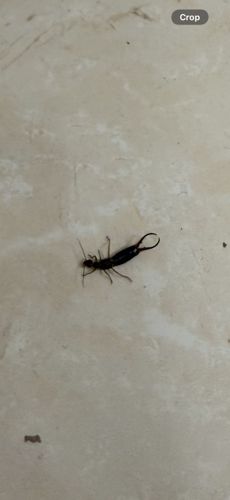
Earwig
Dermaptera (Order)
- Order & Family
- Order: Dermaptera, various families
- Size
- Typically 5-25 mm (0.2-1 inch) long, though some tropical species can be larger.
Natural Habitat
Damp, dark places; under rocks, logs, leaf litter, mulch, in cracks and crevices, and sometimes indoors.
Diet & Feeding
Opportunistic omnivores, feeding on decaying organic matter, small insects (aphids, maggots), mites, and soft plant tissues (flowers, fruits, vegetables).
Behavior Patterns
Nocturnal; they hide during the day and forage at night. They are known for their characteristic pincer-like cerci at the rear of their abdomen, which are used for defense, hunting, and mating. Some species exhibit maternal care, with the female guarding her eggs and young nymphs.
Risks & Benefits
Generally harmless to humans. Their pincers can give a slight pinch if handled, but they are not venomous. They can be a minor pest to gardens, feeding on soft plant parts. However, they can also be beneficial by preying on other garden pests like aphids and slugs, and by helping to decompose organic matter.