
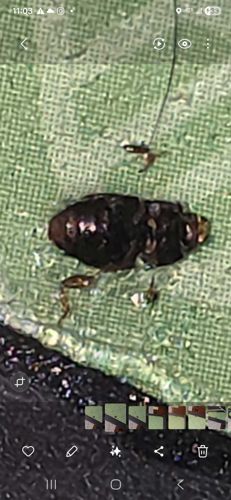
Community identification
Bed bug
Cimex lectularius
- Order & Family
- Hemiptera: Cimicidae
- Size
- 4 to 5 mm (about the size of an apple seed) when fully grown; larger and redder after feeding.
Natural Habitat
Found exclusively in human dwellings, typically in cracks and crevices near sleeping areas, such as mattress seams, bed frames, and behind baseboards.
Diet & Feeding
Obligate hematophages, meaning they feed exclusively on the blood of warm-blooded animals, primarily humans.
Behavior Patterns
Nocturnal parasites that hide during the day and emerge at night to feed. They undergo incomplete metamorphosis with five nymphal stages, each requiring a blood meal to molt.
Risks & Benefits
No known ecological benefits. They are significant public health pests that cause itchy welts, allergic reactions, psychological distress, and potential secondary skin infections from scratching. They do not effectively transmit diseases to humans.