
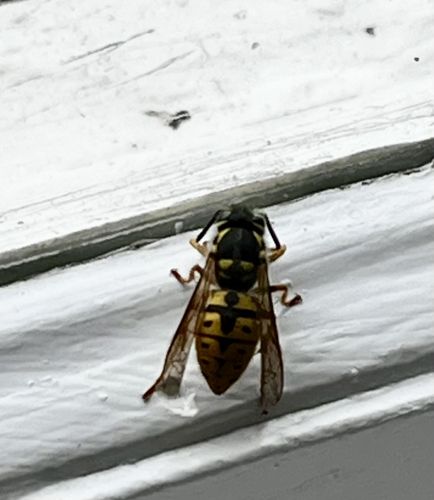
Community identification
Eastern Yellowjacket
Vespula maculifrons
- Order & Family
- Hymenoptera: Vespidae
- Size
- 10 to 16 mm (approx. 1/2 inch) in length.
Natural Habitat
Gardens, woodlands, and urban areas; nests are typically constructed underground or in wall voids and cavities.
Diet & Feeding
Omnivorous; adults feed on nectar and sugary fruits, while larvae are fed protein in the form of chewed-up insects and spiders caught by workers.
Behavior Patterns
Eusocial insects living in annual colonies. They are known for being more aggressive than bees when defending their nest. They exhibit complex foraging behaviors and can become scavengers around human food in late summer.
Risks & Benefits
Benefits the ecosystem by controlling pest insect populations. Risks include painful stings which can cause severe allergic reactions (anaphylaxis) in sensitive individuals. They are considered a nuisance due to their defensive nature near nests.