
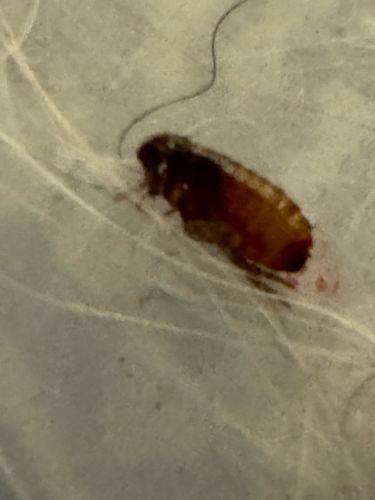
Flea
Ctenocephalides felis (Cat Flea) or Ctenocephalides canis (Dog Flea) are the most common species encountered in homes, with C. felis being more prevalent even on dogs. Identification to species level usually requires microscopic examination.
- Order & Family
- Order: Siphonaptera, Family: Pulicidae (most common pest species like cat and dog fleas)
- Size
- Adult fleas typically range from 1 to 4 mm (0.04 to 0.16 inches) in length.
Natural Habitat
Fleas primarily live on their animal hosts. However, their eggs, larvae, and pupae are typically found in the environment where the host spends time, such as carpets, bedding, cracks in floors, upholstered furniture, and outdoor areas like pet shelters or shaded, moist ground.
Diet & Feeding
Adult fleas are external parasites that feed exclusively on the blood of their animal hosts (e.g., mammals, birds). Larval fleas do not feed on blood; instead, they consume organic debris, skin flakes, and adult flea feces ('flea dirt') which contains dried blood.
Behavior Patterns
Fleas are excellent jumpers, able to leap great distances relative to their size. They undergo complete metamorphosis (egg, larva, pupa, adult). Adults are obligate parasites and spend most of their lives on a host, feeding. Eggs are laid on the host but often fall off into the environment (e.g., bedding, carpets). Larvae feed on organic debris, including adult flea feces ('flea dirt'). Pupae develop in cocoons and can remain dormant for extended periods until a suitable host is detected.
Risks & Benefits
Risks: Fleas are significant pests. Their bites can cause itching, skin irritation (flea allergy dermatitis in pets), and secondary bacterial infections. They are also vectors for several diseases, including bubonic plague (transmitted by Oriental rat fleas), murine typhus, and serve as intermediate hosts for tapeworms (e.g., Dipylidium caninum). Benefits: In natural ecosystems, fleas can be a food source for some predators, but their overall ecological benefits are minimal compared to their negative impact as parasites and disease vectors.