
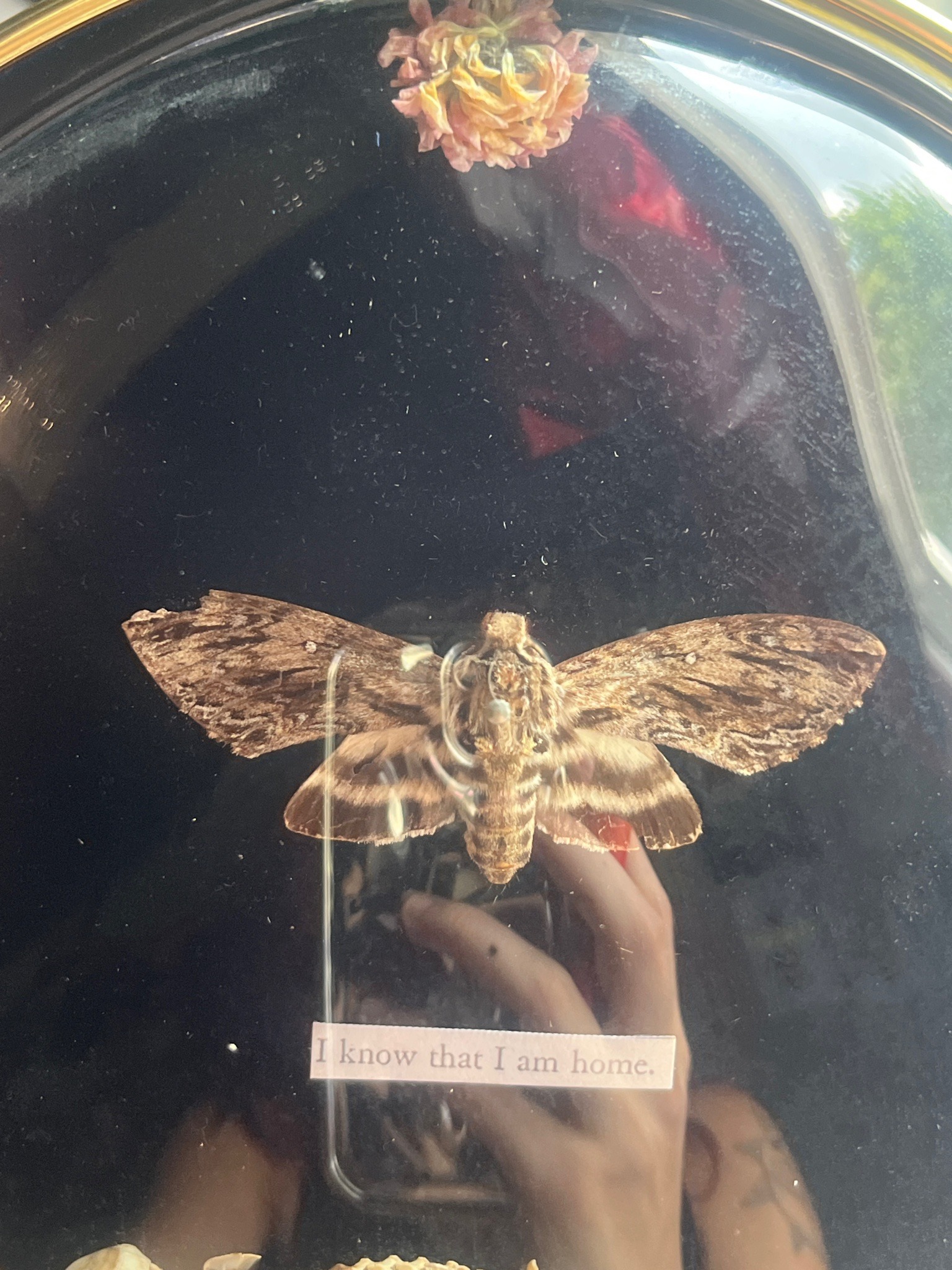
Community identification
Small-eyed Sphinx Moth
Paonias myops
- Order & Family
- Lepidoptera, Sphingidae
- Size
- 4.5 to 7.5 cm (1.8 to 3.0 inches) wingspan
Natural Habitat
Deciduous forests, river valleys, and suburban gardens where host trees like cherry, plum, and birch are present.
Diet & Feeding
Adults generally do not feed, as they lack functional mouthparts once they reach maturity. Larvae (caterpillars) feed on the leaves of cherry, plum, serviceberry, and birch trees.
Behavior Patterns
They are nocturnal and active from late spring to early summer. Like other sphinx moths, they rest with their wings spread or slightly tilted. They undergo complete metamorphosis with pupation occurring in the soil.
Risks & Benefits
They are harmless to humans. As caterpillars, they may cause minor defoliation of host trees, but rarely enough to cause significant damage. They serve as a food source for birds and importance within the local forest ecology.