
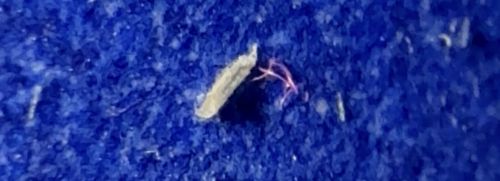
Clothing Moth Larva (specifically the Case-bearing Clothes Moth)
Tinea pellionella
- Order & Family
- Order: Lepidoptera, Family: Tineidae
- Size
- Typically 7-10 mm (approx. 0.25 to 0.4 inches) in length.
Natural Habitat
Dark, closeted areas indoors, particularly where natural fibers are stored such as wardrobes, carpets, drawers, and under furniture. They prefer undisturbed, distinctively dry locations.
Diet & Feeding
They feed on keratin-rich natural fibers including wool, silk, fur, feathers, leather, and hair. They will also eat lint and dust that contains human or pet hair.
Behavior Patterns
The larva builds a flattened, portable, silken case around itself, which it carries as it moves (often looking like a crawling piece of lint or a grain of rice). They are photophobic (avoid light) and tend to remain hidden in folds of fabric or deep pile carpets.
Risks & Benefits
Risks: They are a significant household pest that causes irreversible damage to expensive clothing, carpets, tapestries, and taxidermy by chewing holes through the fabric. Benefits: In nature (not indoors), they play a minor role as decomposers of animal hair and feathers.