
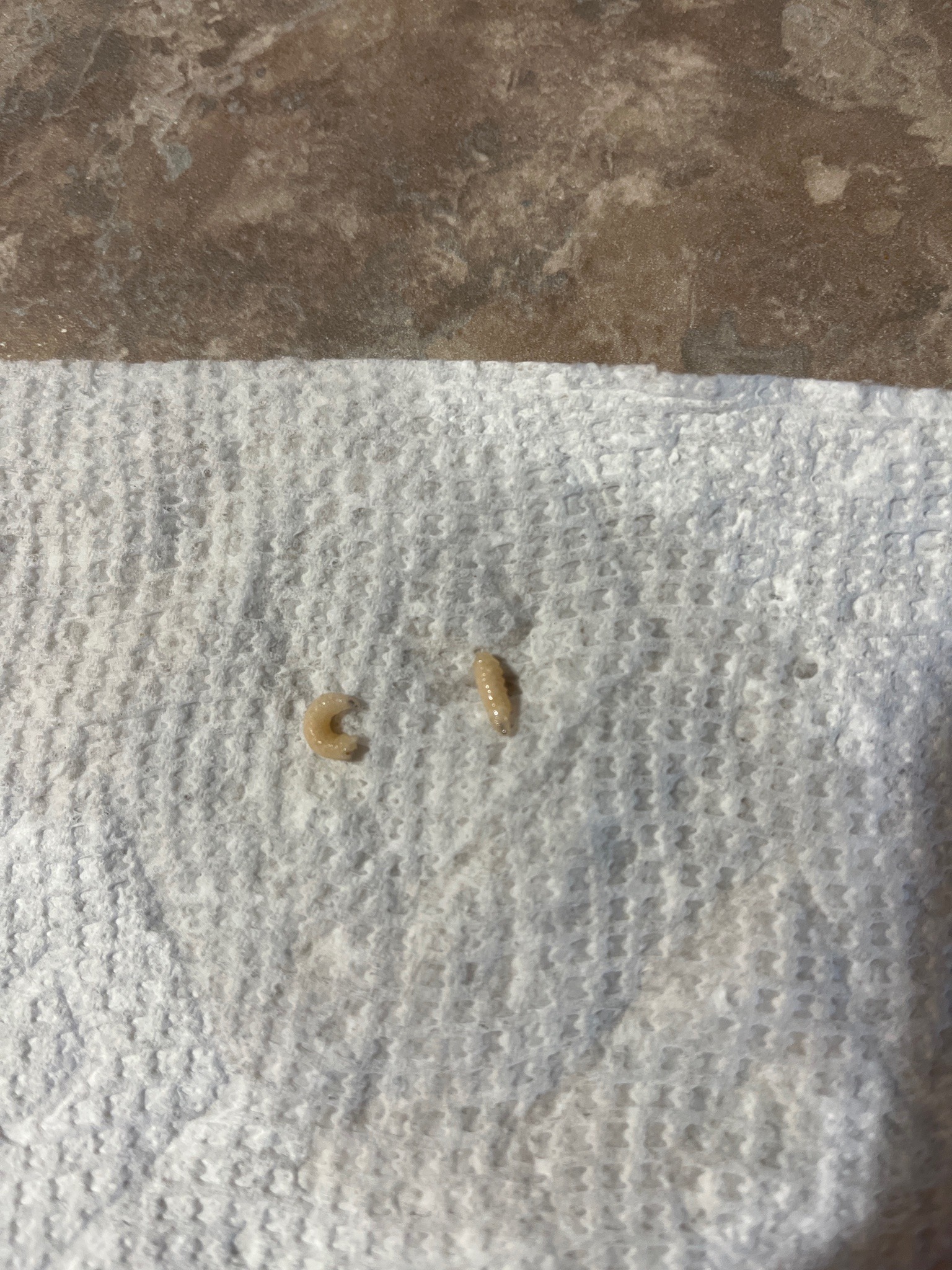
Indian meal moth larva
Plodia interpunctella
- Order & Family
- Lepidoptera: Pyralidae
- Size
- Larvae grow to approximately 10–12 mm (0.4–0.5 inches) long.
Natural Habitat
Worldwide in human structures, particularly pantries, kitchens, and food storage facilities containing dried goods.
Diet & Feeding
Pantrophagous; feeds on a wide variety of dried food products including grains, cereals, flour, pasta, nuts, seeds, dried fruits, chocolate, and pet food.
Behavior Patterns
Larvae spin silken webs as they feed, which contaminates the food source. They often crawl away from their food source to find cracks or crevices in which to pupate, which is when they are most frequently spotted by homeowners.
Risks & Benefits
Risk: Major stored-product pest causing significant food waste and economic loss; webs and fecal matter can cause allergic reactions in sensitive individuals. Benefit: None to humans; they serve as a food source for certain parasitic wasps in the ecosystem.