
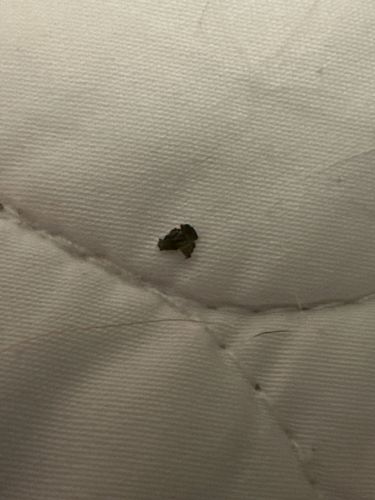
Carpet Beetle (appears to be a Varied Carpet Beetle larva, possibly dead or dried)
Likely *Anthrenus verbasci* (Varied Carpet Beetle), but precise species identification from this image alone is difficult.
- Order & Family
- Order: Coleoptera, Family: Dermestidae
- Size
- Larvae typically range from 2 millimeters to 5 millimeters (0.08 to 0.2 inches) in length. Adults are small, usually 2-3 millimeters (0.08-0.12 inches).
Natural Habitat
Indoors, they are commonly found in homes, museums, warehouses, and other buildings where suitable food sources are present. Outdoors, adults can be found on flowering plants.
Diet & Feeding
Larvae primarily feed on animal-based products containing keratin, such as wool, silk, fur, feathers, leather, dead insects, pet hair, and even dried museum specimens. They are also known to consume plant-based materials like grains, nuts, and starches. Adult carpet beetles feed on pollen and nectar.
Behavior Patterns
Carpet beetle larvae prefer dark, undisturbed areas. They are often found in closets, under furniture, or in the corners of rooms. Adults are attracted to light and may be found near windows. They undergo complete metamorphosis with egg, larva, pupa, and adult stages. Larvae are the destructive stage, feeding on various organic materials for several weeks to months, depending on conditions. Adults feed on pollen and nectar.
Risks & Benefits
Risks: Carpet beetle larvae can cause significant damage to household items, clothing, carpets, upholstered furniture, and museum collections. They do not bite humans but some people may experience skin irritation or allergic reactions due to contact with larval hairs or shed exoskeletons. Benefits: Outdoors, they can be considered decomposers, helping to break down organic matter in nature.