
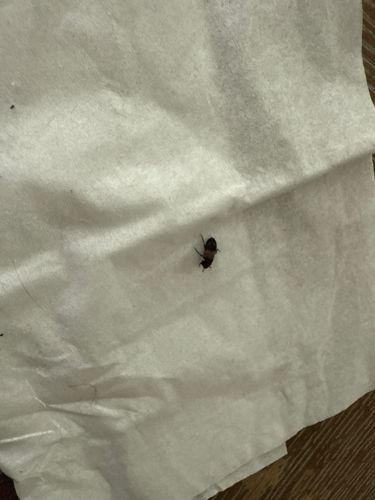
Cockroach (likely German or Oriental based on appearance)
Blattella germanica (German cockroach) or Blatta orientalis (Oriental cockroach) are common possibilities, but definitive identification without clearer features is difficult.
- Order & Family
- Order: Blattodea, Family: Blattidae (or closely related families like Ectobiidae for German cockroaches)
- Size
- Common pest species like the German cockroach are typically 1.1 to 1.6 cm (0.43 to 0.63 in) long. Oriental cockroaches are larger, ranging from 2.5 to 3.5 cm (1.0 to 1.4 in).
Natural Habitat
Cockroaches prefer warm, damp, and dark environments. Indoors, they can be found in kitchens, bathrooms, basements, wall voids, and behind appliances. Outdoors, they inhabit leaf litter, under rocks, in logs, and in sewers.
Diet & Feeding
Cockroaches are omnivores and scavengers. They will eat almost anything organic, including crumbs, grease, paper, books, decaying matter, and even other cockroaches when food is scarce. They are particularly attracted to starches, sweets, and fatty foods.
Behavior Patterns
Cockroaches are primarily nocturnal and gregarious. They typically hide in cracks and crevices during the day and come out at night to forage for food and water. They are known for their rapid reproduction rate and ability to adapt to various environments. Many species can run very quickly. Some species can fly or glide.
Risks & Benefits
Risks: Cockroaches can carry and spread various bacteria, viruses, fungi, and parasites, potentially contaminating food and surfaces. They can trigger allergies and asthma in sensitive individuals through their droppings and shed skins. A large infestation can lead to an undesirable odor. Benefits: In natural ecosystems, some cockroach species play a role as decomposers, breaking down organic matter. However, common pest cockroaches offer no direct benefits to humans.