
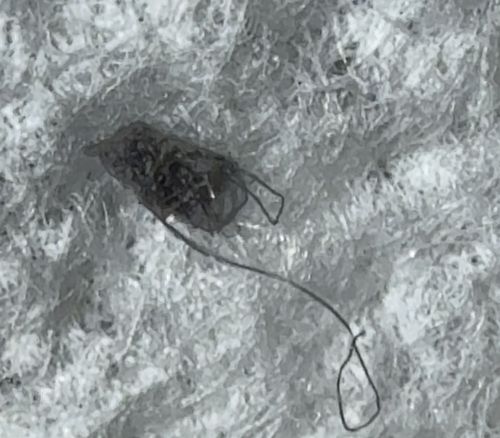
Case-bearing Clothes Moth Larva (casing)
Tinea pellionella
- Order & Family
- Order: Lepidoptera, Family: Tineidae
- Size
- Larval case is usually about 5–10 mm (0.2–0.4 inches) long.
Natural Habitat
Typically found indoors in dark, undisturbed areas such as closets, under furniture, or in carpets; they thrive on natural fibers like wool, silk, fur, and hair.
Diet & Feeding
The larvae feed on keratin-rich materials including woolens, rugs, furs, upholstered furniture, lint, hair, and sometimes stored pantry goods.
Behavior Patterns
Unlike other clothes moths, this larva carries a silken case around with it for protection, rarely leaving it. It drags the case along as it feeds and will enlarge it as it grows. They tend to graze on fabric, leaving irregular holes or shaved-down patches.
Risks & Benefits
Risks: Significant pest of textiles; can cause extensive and costly damage to clothing, carpets, and heirlooms made of natural fibers. Benefits: No direct benefits to humans, though they play a role in nutrient recycling of animal matter in the wild.