
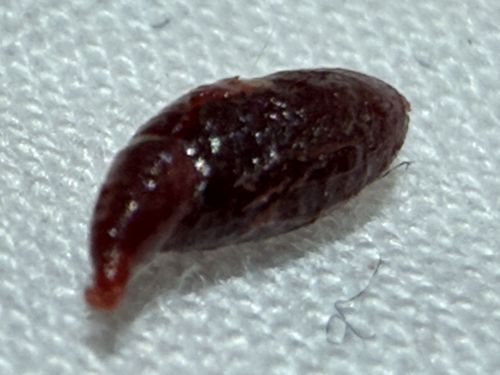
Community identification
Fly Puparium
Brachycera (suborder)
- Order & Family
- Order: Diptera; Family: Variable (Commonly Muscidae or Calliphoridae)
- Size
- 3mm to 10mm in length
Natural Habitat
Often found in indoor environments near organic decay, trash cans, or hidden corners; outdoors in soil or leaf litter.
Diet & Feeding
The pupa does not eat; however, the larval stage (maggot) typically feeds on decaying organic matter or waste.
Behavior Patterns
This is the non-moving, protective casing for the transformation stage from larva to adult fly. It remains stationary until the adult emerges.
Risks & Benefits
Generally harmless as a pupa, but indicates a nearby breeding site. High numbers may suggest sanitation issues or a hidden source of decay (risks of spreading bacteria by adult flies).