
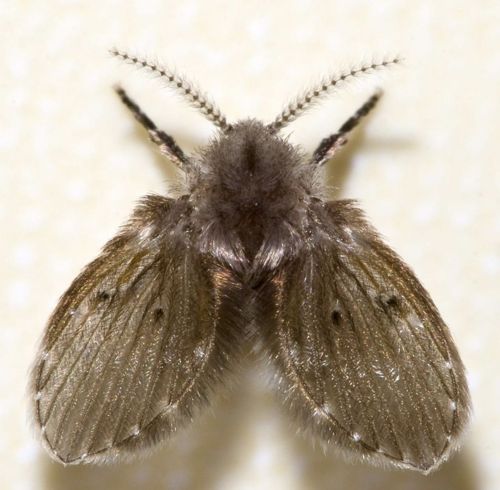
Drain Fly, Moth Fly, Filter Fly, Sewer Fly
Psychoda species (e.g., Psychoda alternata, Psychoda cinerea)
- Order & Family
- Order: Diptera, Family: Psychodidae
- Size
- Adults are typically 2-5 mm (1/16 - 1/4 inch) in length.
Natural Habitat
Drain flies prefer moist, organic-rich environments such as drains, sewers, septic tanks, compost piles, and wet soil. Indoors, they are commonly found in bathrooms, kitchens, and basements where standing water or slow drains are present.
Diet & Feeding
Adult drain flies feed on nectar and polluted water. Larvae feed on decaying organic matter, bacteria, algae, and fungi found in the sludge and biofilm of drains, sewers, and other moist, decaying environments.
Behavior Patterns
Adult drain flies are weak, erratic fliers and are typically found close to their breeding sites. They are most active at night. Larvae and pupae live in the gelatinous film found in drains and pipes, feeding on organic matter. Adults do not bite but can be a nuisance.
Risks & Benefits
Potential risks include being a nuisance pest, especially when present in large numbers. While they are not known to transmit diseases to humans, they can carry bacteria and other microorganisms from their breeding sites (like sewage) onto surfaces. Their presence can also indicate an underlying plumbing issue or excessive organic buildup. Benefits are minimal directly to humans but in nature, their larvae contribute to the decomposition of organic matter.