
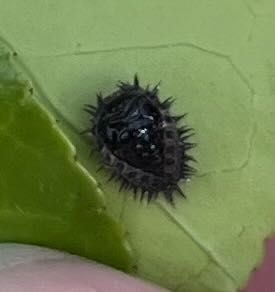
Ladybug larva (or Ladybird larva)
Coccinellidae (Larval Stage) - specific species varies
- Order & Family
- Coleoptera, Coccinellidae (Ladybugs/Ladybirds)
- Size
- Typically 4-10 mm depending on the species and larval instar.
Natural Habitat
Gardens, agricultural fields, orchards, and other areas where their prey (e.g., aphids) are abundant, often found on plants.
Diet & Feeding
Primarily soft-bodied insects, especially aphids, also scale insects, mealybugs, and mites. They are voracious predators during their larval stage.
Behavior Patterns
Ladybug larvae are active predators, constantly searching for prey. They move relatively slowly. They undergo complete metamorphosis, passing through egg, larva, pupa, and adult stages. The spiky appearance of the larva may deter some predators.
Risks & Benefits
Ladybug larvae are highly beneficial insects for agriculture and gardening. They are natural biological control agents that help manage pest populations without the need for chemical pesticides. They pose no direct risk to humans.