
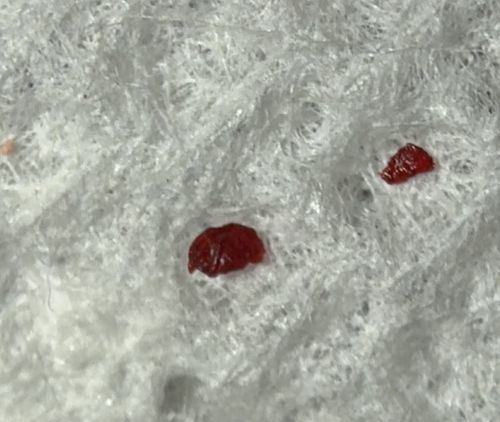
Community identification
Bed bug (fecal spot/blood spotting)
Cimex lectularius
- Order & Family
- Hemiptera: Cimicidae
- Size
- Adults: 4–5 mm long; Nymphs: 1.5–4 mm (The red spots shown appear to be dried blood or fecal matter, which are signs of an infestation).
Natural Habitat
Indoor environments, specifically in mattresses, box springs, bed frames, and cracks or crevices near sleeping areas.
Diet & Feeding
Obligate hematophagous (blood-feeders), primarily feeding on human blood, though they may bite other mammals or birds.
Behavior Patterns
Nocturnal and elusive; they hide during the day and emerge at night to feed. They are attracted to heat and carbon dioxide. They do not fly or jump but crawl rapidly.
Risks & Benefits
Risks include itchy welts, allergic reactions, and psychological distress/insomnia. While not known to transmit diseases to humans, infestations are difficult and costly to eradicate. They provide no known ecological benefits to human habitats.