
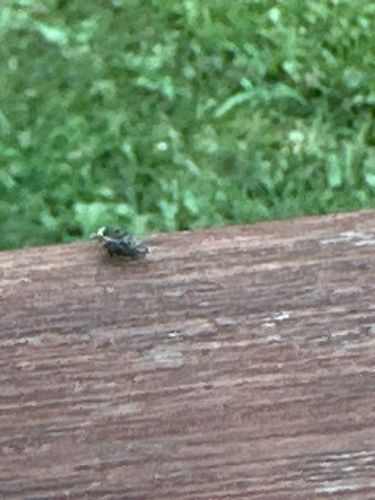
House Fly
Musca domestica
- Order & Family
- Order: Diptera, Family: Muscidae
- Size
- Typically 6 to 7 mm (0.24 to 0.28 inches) in length, with a wingspan of 13 to 15 mm (0.5 to 0.6 inches).
Natural Habitat
House flies are highly adaptable and are found in close association with humans and their waste products. They thrive in areas with decaying organic matter, such as garbage dumps, compost piles, animal waste, and unsanitary conditions.
Diet & Feeding
Adult house flies feed on a wide range of liquid or semi-liquid substances, including decaying organic matter, faeces, and food. They regurgitate digestive juices onto solid food to liquefy it before ingesting.
Behavior Patterns
Flies are typically active during the day. House flies are known for their quick and erratic flight patterns. They are attracted to food and decaying matter. Females lay eggs in fermenting organic matter.
Risks & Benefits
Risks: House flies are significant vectors of disease-causing pathogens, transmitting bacteria, viruses, fungi, and parasites that can cause diseases like cholera, typhoid fever, dysentery, and food poisoning. They can contaminate food and surfaces. Benefits: In natural ecosystems, fly larvae (maggots) play a role in decomposition, helping to break down organic matter.