
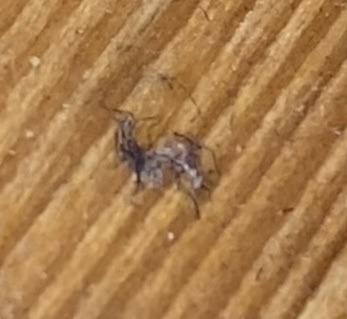
Masked Hunter Nymph
Reduvius personatus
- Order & Family
- Hemiptera: Reduviidae
- Size
- Nymphs ranges from 5 to 15 mm; adults can reach approximately 17–22 mm.
Natural Habitat
Widely distributed globally; frequently found inside homes, barns, and warehouses, particularly in dry areas or corners where dust accumulates.
Diet & Feeding
Strictly carnivorous predators that feed on other small arthropods, including bed bugs, termites, earwigs, lacebugs, and flies.
Behavior Patterns
Nymphs exhibit a unique camouflaging behavior by secreting a sticky substance that allows dust, sand, and debris to adhere to their bodies, making them look like a ball of lint. They are nocturnal and stealthy hunters.
Risks & Benefits
Benefits the ecosystem and homeowners by acting as natural pest control for bed bugs and other infestations. Risks: Though not medically significant or aggressive to humans, they can deliver a painful bite if handled or provoked, which may cause local swelling.