
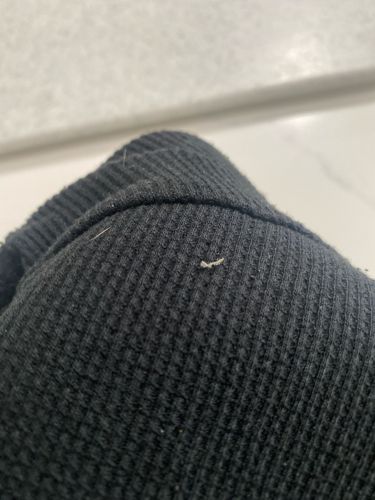
Community identification
Clothing moth larva / Case-making clothes moth (likely)
Tinea pellionella
- Order & Family
- Order: Lepidoptera, Family: Tineidae
- Size
- Larvae are typically 1/4 to 1/2 inch (7–12 mm) in length.
Natural Habitat
Indoor environments, particularly dark, undisturbed areas like closets, drawers, and attics where natural fibers are stored.
Diet & Feeding
Animal-based natural fibers including wool, silk, fur, feathers, and leather; they consume the protein keratin found in these materials.
Behavior Patterns
Larvae often live inside a portable silken case or tube made from the fibers they eat. They are photophobic (avoid light) and prefer humid, quiet locations for feeding and development.
Risks & Benefits
Risks: Can cause significant permanent damage to expensive clothing, upholstery, and carpets. They do not pose a direct health risk to humans but are considered a major household pest. Benefits: In nature, they help decompose animal remains like fur and feathers.