
Community identification
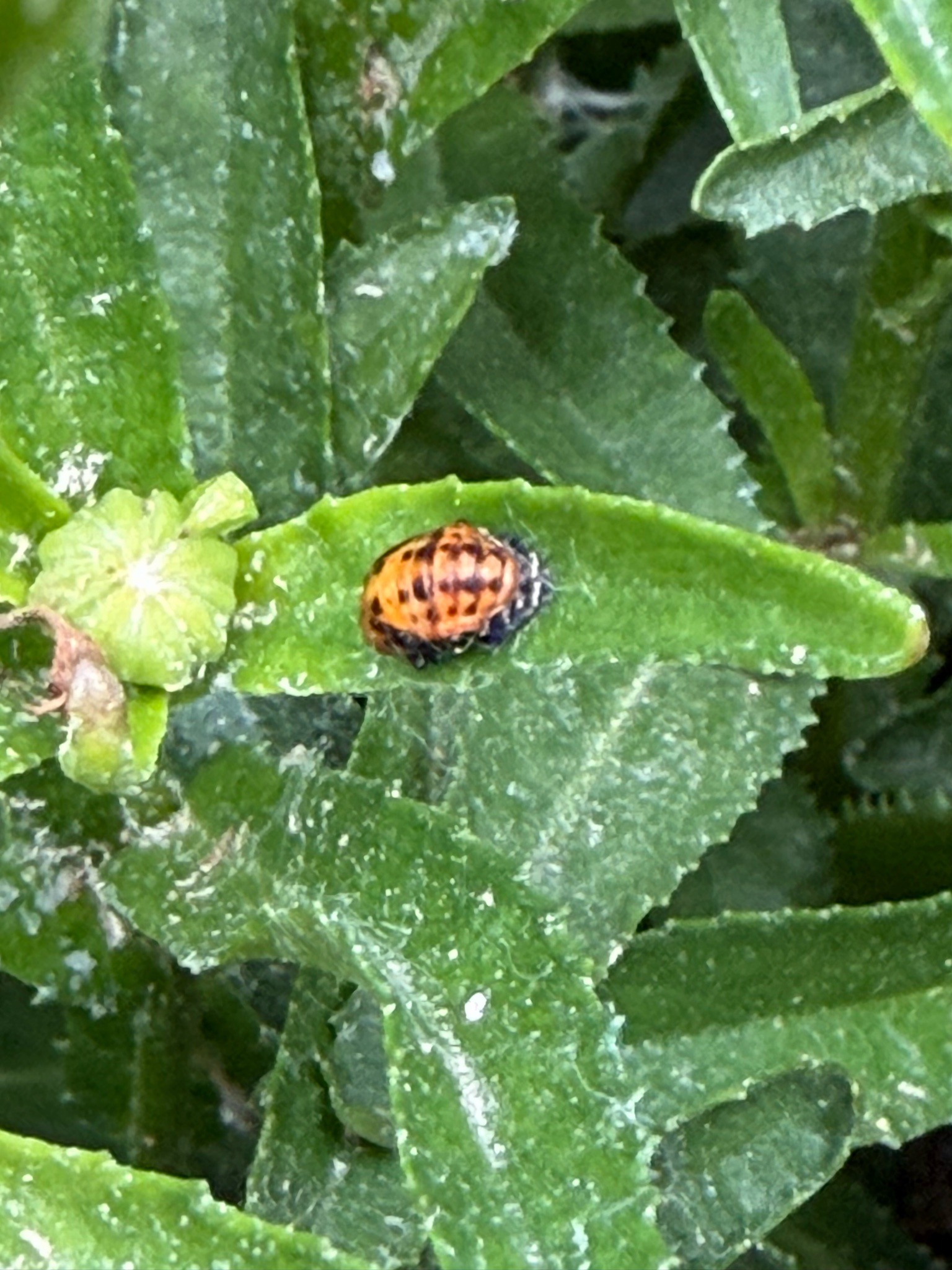
Harlequin ladybird (pupa stage)
Harmonia axyridis
- Order & Family
- Coleoptera, Coccinellidae
- Size
- 5 to 8 mm
Natural Habitat
Gardens, agricultural fields, woodlands, and urban areas with high aphid populations.
Diet & Feeding
Strictly aphidovorous during larval and adult stages (though the pupa does not eat). They prey on aphids, scale insects, and sometimes the eggs of other insects.
Behavior Patterns
This image shows the pupal stage, an immobile phase where the larva transforms into an adult. The pupa is typically attached to a leaf or stem by its tail end and may jerk upward if disturbed as a defense mechanism.
Risks & Benefits
Benefits the ecosystem as a powerful biological control agent for garden pests. However, they are considered an invasive species in many regions, potentially outcompeting native ladybugs, and can produce a foul-smelling yellow fluid if stressed.