
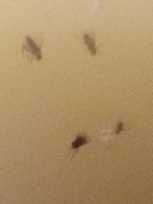
Community identification
Fruit fly
Drosophila melanogaster
- Order & Family
- Order: Diptera, Family: Drosophilidae
- Size
- 3 to 4 mm (0.12 to 0.16 inches) in length
Natural Habitat
Worldwide, primarily in kitchens, gardens, and food processing facilities near fermenting organic matter.
Diet & Feeding
Adults and larvae feed on the microorganisms (yeast and bacteria) found on ripening or decaying fruit and vegetables.
Behavior Patterns
Drawn to the smell of fermentation; they have extremely fast reproductive cycles, often reaching adulthood in 1-2 weeks. They are active during day-time and frequently hover in groups.
Risks & Benefits
Risks: Nuisance pest that can contaminate food with bacteria and pathogens. Benefits: Essential model organism for biological research, genetics, and developmental studies.