
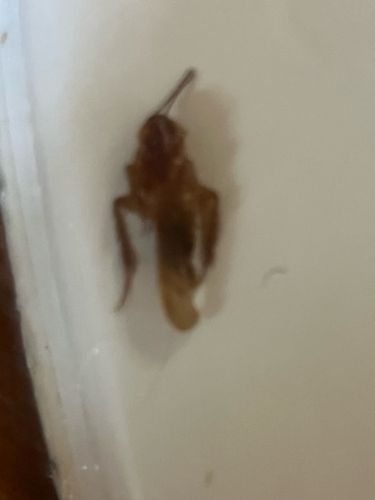
Cockroach (likely American Cockroach or similar large species based on size and color)
Periplaneta americana (for American Cockroach, which is a common type that looks similar to the one in the photo)
- Order & Family
- Order: Blattodea, Family: Blattidae (for American Cockroaches)
- Size
- Typically 35-50 mm (1.4-2 inches) for adult American Cockroaches, but other species vary from a few millimeters to several centimeters.
Natural Habitat
Warm, humid, and dark environments, often found in kitchens, bathrooms, basements, drains, sewers, and other concealed areas within human dwellings and commercial buildings.
Diet & Feeding
Omnivorous scavengers, feeding on almost anything organic, including food scraps, decaying matter, dead insects, fabric, paper, and even soap.
Behavior Patterns
Cockroaches are primarily nocturnal and gregarious insects, meaning they are active at night and tend to live in groups. They are known for their rapid reproduction and ability to adapt to various environments. When disturbed, they typically scatter quickly.
Risks & Benefits
Risks: Cockroaches are considered pests. They can carry and spread bacteria, viruses, and parasites, contaminating food surfaces and utensils. They can also trigger allergies and asthma in sensitive individuals through their droppings and shed skin. Benefits: In natural ecosystems, some species play a role as decomposers, breaking down organic matter. However, the species commonly found indoors offer no direct benefits to humans and are largely considered detrimental.